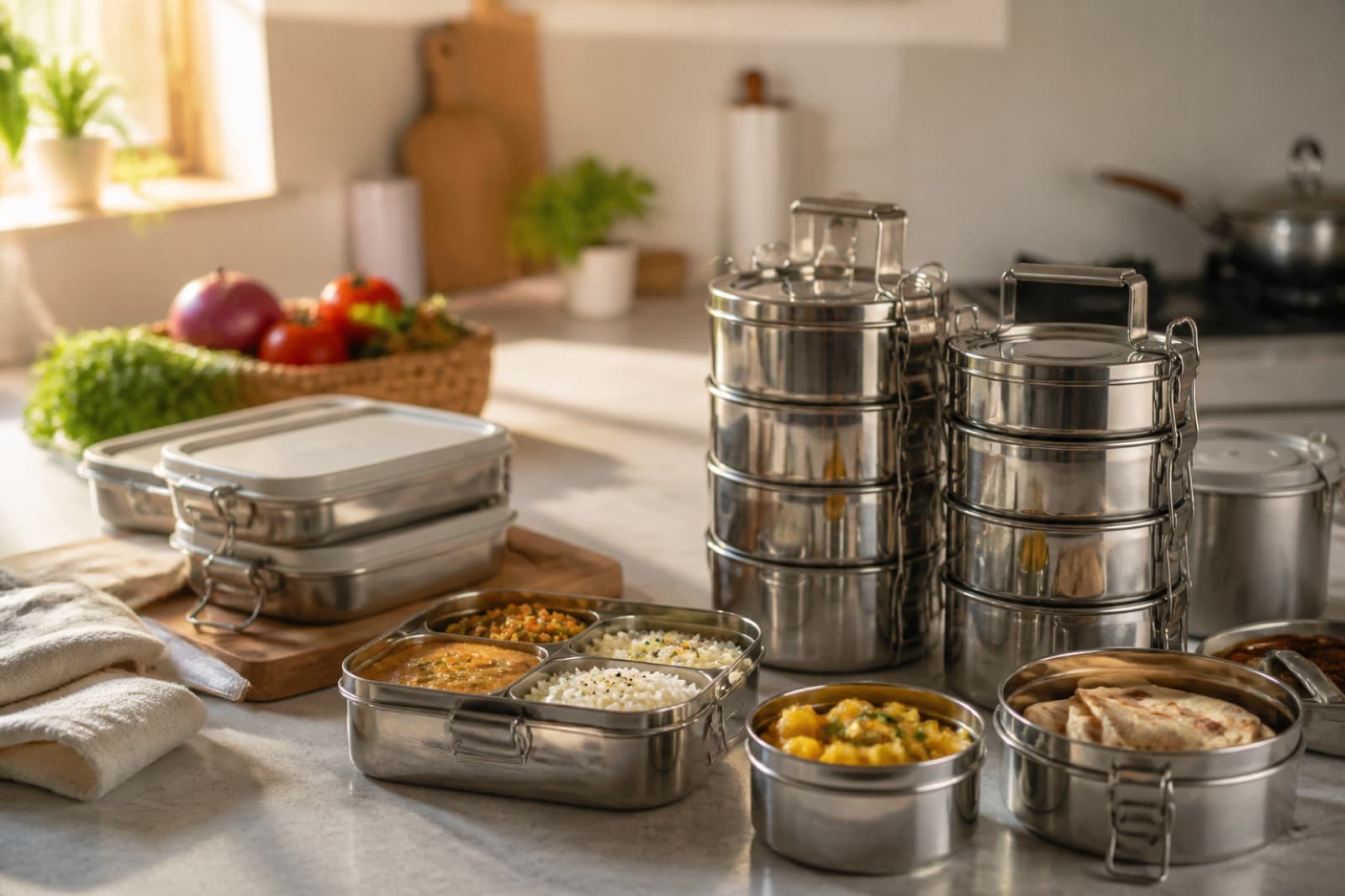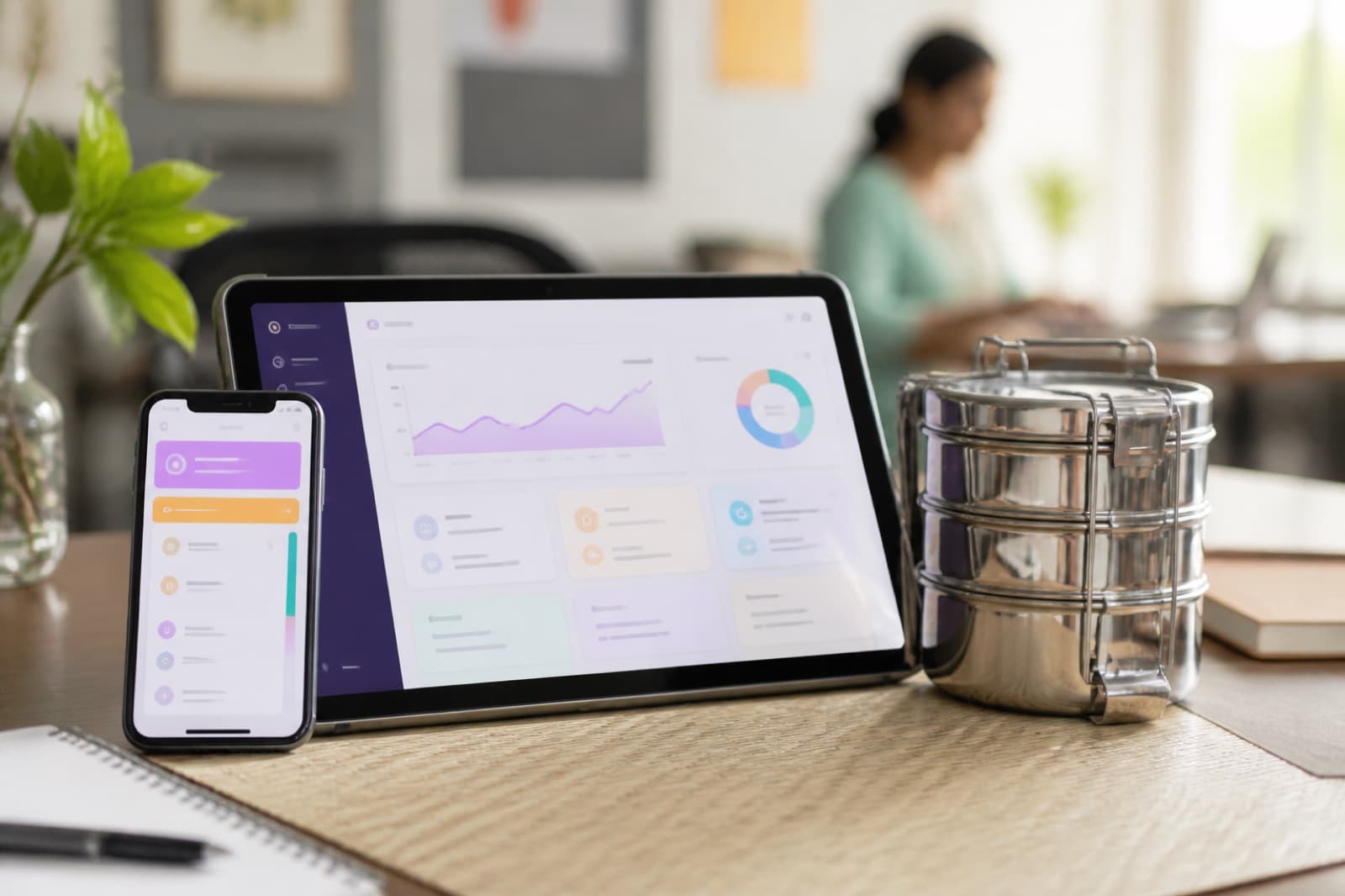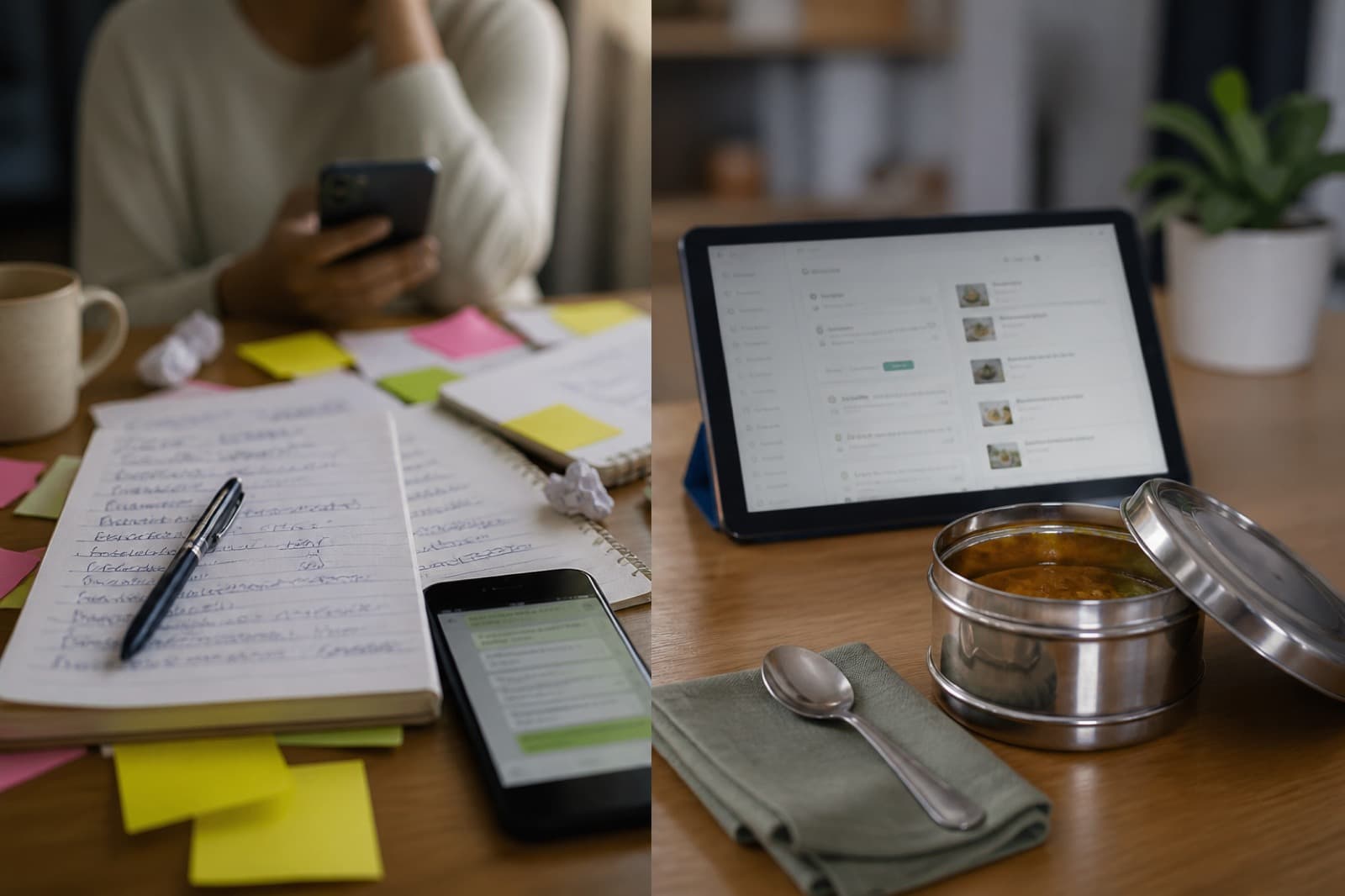
WhatsApp or a real online tiffin business—what are you actually running?
Most homemade tiffin businesses in India start the same way: a WhatsApp broadcast, a UPI QR, a notebook of who eats lunch, and a promise that “I’ll remember your pause.” For the first 15–25 regulars, that stack feels free and fast. Then the chats pile up, a customer swears they told you they were in the village, the delivery boy asks which bag is whose, and month-end GST becomes a scavenger hunt through payment screenshots.
This is not a lecture against WhatsApp. It is a brutal comparison between running orders inside chat and running an online tiffin business with a branded website, ordering app, and subscription plans customers can manage themselves. The right answer depends on how many people you feed, how messy pauses get, and whether you need a clean money and delivery trail.
If you already know you want a branded storefront, start with TasteIQ’s tiffin launcher or open a 14-day trial. The rest of this guide helps you decide when that move stops being optional.
What does a WhatsApp tiffin business look like day to day?
A WhatsApp tiffin business is usually:
- A group or broadcast list for tomorrow’s menu
- Individual chats for “skip Thursday,” “extra roti,” and “payment done”
- UPI transfers with notes that may or may not match the customer name
- A paper register, Google Sheet, or someone’s memory for who is active
- A verbal route for the rider: “first floor blue door, then the PG”
It works because the founder is the system. Response time is personal. Trust is personal. Changes are personal. That intimacy is a real advantage at small scale—especially for a homemade tiffin business online that grows through neighbours, offices, and society WhatsApp groups.
The cost is invisible until volume rises. Every pause request is a negotiation. Every missed chat is a wasted dabba or an angry regular. Every UPI ping without context becomes a reconciliation problem. Delivery lists live in heads, not in a shared source of truth.
What does a branded tiffin plan website and app change?
A digitized setup flips the operating model. Customers open your link, see breakfast, lunch, or dinner plans, subscribe, and manage pause, resume, and skip without hunting you in unread messages. You pack from a daily list. Riders—own fleet or third-party staff—work from the same list. Billing can leave a GST-ready trail instead of a screenshot folder.
On TasteIQ specifically, that means:
- A branded website plus ordering app under your name
- Subscription meal plans (not one-off chat orders as the default)
- Built-in pause, resume, and skip so travel fights move out of DMs
- A daily delivery list you can run with your own riders or third-party delivery staff
- GST-ready invoices for a food business
- Setup that is typically about ~15 minutes from menu photos, with a 14-day free trial
TasteIQ does not acquire subscribers for you. Digitize the operations; marketing, referrals, and local reach stay yours. That honesty matters: software replaces the notebook, not the neighbourhood trust you already built.
Operators who also run dine-in or takeaway counters often pair subscription ops with broader restaurant POS software—but a pure tiffin brand can start on the tiffin path alone.
WhatsApp + UPI vs branded online ordering: side-by-side
| Factor | WhatsApp + UPI + notebook | Branded website/app + subscriptions |
| --- | --- | --- |
| Ordering | Chat messages, forwards, voice notes | Customer picks a plan on your link |
| Pause / skip | Manual replies; easy to miss or dispute | Customer-managed pause, resume, skip |
| Payments | UPI screenshots; weak matching | Checkout tied to the subscription |
| Kitchen truth | Memory, chat search, scribbled lists | Daily active subscriber list |
| Delivery | Verbal routes; chaos as volume grows | Shared list for own fleet or third-party staff |
| GST / books | Hard to reconstruct after the fact | GST-ready billing trail |
| Brand feel | Your personal number | Your tiffin plan website and app |
| Best scale | Roughly ≤20–30 active customers | Growing bases that need structure |
| Founder time | High—every exception is a chat | Lower on admin; higher on cooking and marketing |
Neither column is “moral.” WhatsApp is a channel. An online tiffin business stack is an operating system. Confusing the two is how kitchens burn out.
When is WhatsApp still enough?
Stay on WhatsApp if all of the following are true:
- You have roughly 20–30 or fewer active daily customers
- You personally answer messages during order windows
- Pauses are rare, and customers accept delayed replies
- One person can recite tomorrow’s list without opening five threads
- You are not yet filing messy GST reconstructions every month
- Growth is intentional and slow—you are not promising “any society, any day”
At that size, building software before you have demand can be premature. Use WhatsApp groups to acquire and retain trust. Just do not pretend chat is a subscription ledger.
A practical rule: if you can print tomorrow’s list from one place in under two minutes—and that list matches who actually paid and who actually paused—WhatsApp is still fine. The moment that list requires scrolling through unread chats, you have crossed the line.
When does a WhatsApp tiffin business break?
1. Pause fights and “I told you” moments
Travel, festivals, WFH days, and family visits create pause requests. In chat, those requests compete with memes, forwards, and payment confirmations. You cook for someone who left town. Or you skip someone who swears they never asked. Either way, trust erodes faster than margin.
A proper subscription layer moves pause, resume, and skip into the product. The kitchen list updates from customer action, not from your memory of last night’s chat.
2. Missed chats and unread chaos
Once you juggle lunch and dinner cohorts, multiple buildings, and “extra sabzi” exceptions, WhatsApp becomes a noisy inbox, not an order book. A single silent hour during prep can create five wrong packs. Wrong packs create refunds, freebies, and reputation damage in the same group that once fueled referrals.
3. No clean GST trail
UPI is excellent for payment rails. It is a weak invoice system. Month-end, you need to know who paid for which plan period—not who sent ₹2,400 with the note “tiffn.” Food businesses that grow past informal scale need GST-ready billing they can defend. Rebuilding books from chat exports is how founders lose evenings (and arguments with their CA).
For policy context on registration and compliance expectations, see GST portal guidance and keep food-safety licensing on your parallel track via FSSAI FoSCoS. Software does not replace licences; it replaces the spreadsheet panic.
4. Delivery chaos
The first rider knows every flat. The second rider does not. Third-party helpers need a list, not folklore. When active subscribers change daily because of pauses, a verbal route collapses. An online tiffin business needs one packing and dispatch list—whether you use your own fleet or third-party delivery staff.
5. You cannot hire help into your head
If only you understand who is on a monthly plan, who paid week-to-week, and who is “temporary,” you cannot take a sick day. Digitization is how a homemade kitchen becomes a transferable operation instead of a founder-dependent favour network.
How do you digitize a tiffin service without losing your regulars?
Treat migration as a two-week playbook, not a big-bang switch.
Week 0: Decide the cutover rules
- Freeze new “special arrangements” that only live in chat
- List every active customer, plan (breakfast / lunch / dinner), rate, and known pause habit
- Pick your delivery model: own riders, third-party staff, or a mix
- Choose your storefront path—TasteIQ’s online tiffin flow is built for this exact job
Days 1–2: Stand up the branded layer
Upload menu photos, set weekly or monthly plans, and enable pause / resume / skip. On TasteIQ, most kitchens reach a usable setup in about fifteen minutes, then refine plan names and delivery windows. Start the 14-day trial from partners.tasteiq.in/signup so you can test with real orders before you commit.
Days 3–5: Move your warmest regulars first
Message your top 10–15 customers personally: “Same food, same you—orders and pauses now live on this link.” Keep WhatsApp as support and community, not as the cart. Offer to walk one customer through subscribe + pause so the group hears a human success story.
Days 6–10: Dual-run without dual-entry forever
Accept that a few people will still UPI you directly. Translate those into the system the same day so the kitchen list stays honest. Do not run two truths for more than a short window—dual-entry is how notebooks return through the side door.
Days 11–14: Close the chat-as-POS chapter
Update your status and group description: menus and plans on the website/app; WhatsApp for clarifications only. Publish tomorrow’s list only from the software. Train riders on that list. Turn on GST-ready invoicing habits from day one of the new month so you never rebuild from screenshots again.
What not to promise during migration
Do not tell customers “the app will get you more subscribers.” Digitize service quality—clear pauses, reliable delivery lists, proper bills. Acquisition remains referrals, societies, offices, SEO, and your own outreach. Software that claims guaranteed subscriber growth is selling fantasy; TasteIQ sells the operating layer.
Which path should you choose this month?
Use this filter:
- ≤20–30 customers, founder answers every chat, pauses are rare → WhatsApp + UPI can wait. Professionalize food quality and delivery punctuality first.
- Pause disputes, missed messages, or delivery confusion already happening → Digitize now. Chat will not heal under more volume.
- You want a homemade tiffin business online that looks like a brand → Launch a tiffin plan website and app, keep WhatsApp as distribution, not as the ledger.
- You need GST-ready records and help that can run without you → You need systems, not another broadcast list.
The honest summary: WhatsApp is a brilliant growth and trust channel. It is a fragile subscription ERP. An online tiffin business needs the second as soon as exceptions outnumber easy days.
Ready to move off chat-as-POS?
If you are past the notebook stage—or you can see that wall coming—run the comparison in real life. Stand up your branded website and ordering app, configure plans with pause and resume, and pack from one delivery list.
Start your 14-day TasteIQ trial · read the tiffin product page · or explore restaurant POS software if your kitchen also needs counter billing beyond subscriptions.
Same recipes. Fewer fights. A trail your future self (and your CA) can actually follow.