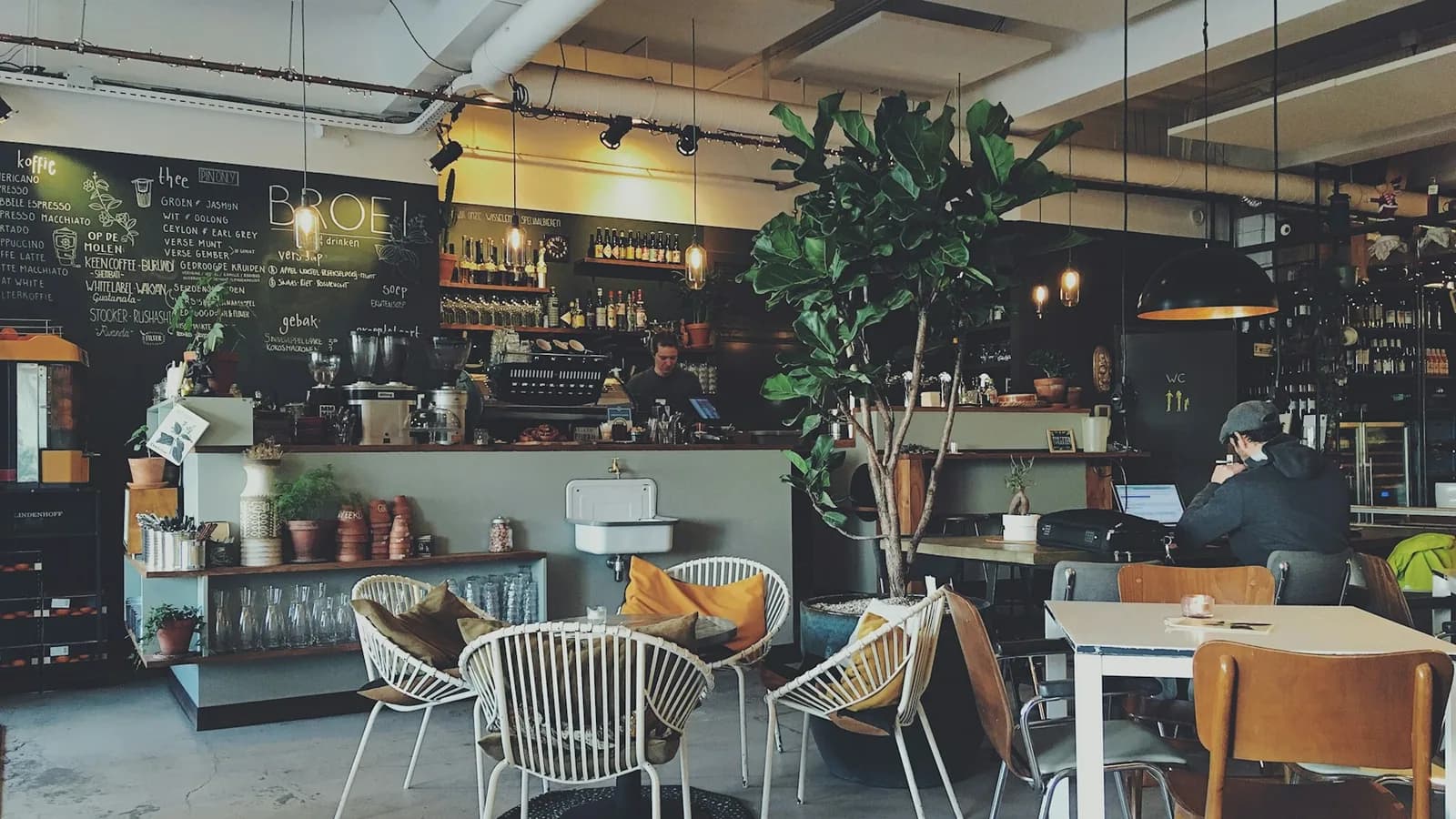
Why do so many first-time cafe owners struggle in the first 90 days?
Most first-time cafe owner mistakes in India are not branding mistakes. They are operations mistakes. The menu may look polished, the space may photograph well, and opening-week footfall may feel encouraging, but the real pressure begins when the same team has to repeat service every day without confusion. Orders pile up, shifts change, GST invoices need to stay clean, ingredients run low, and suddenly nobody can say which sandwich variant actually sold or why cash is short at close.
That is why the first 90 days matter so much. They decide whether your cafe becomes a controlled business or a daily rescue mission. The good news is that most early failures are preventable. Below are 12 common first-time cafe owner mistakes in India, why each one creates stress, and what better operations look like instead.
1. Launching without item codes or a clean menu structure
Many new cafes start with a customer-facing menu but no internal naming discipline. The guest sees "Cold Coffee," "Iced Coffee," and "House Cold Coffee," while the cashier, owner, and kitchen all use different shorthand for the same product. Once sizes, add-ons, and combos enter the picture, reporting becomes unreliable.
This is not a cosmetic issue. Without item codes or at least a clean SKU-style menu structure, you cannot track what sold, which items are profitable, or which variants create prep delays. End-of-week sales reviews turn into guesswork, and stock buying becomes driven by memory instead of evidence.
Better ops: assign every item a standard name, category, and code from day one. Separate size variants and add-ons instead of burying them inside one vague line item. A good restaurant POS software setup should let the counter, kitchen, and reports all speak the same item language.
2. Running service without a shift-close routine
First-time owners often obsess over launch day and ignore closing discipline. Cash is left unreconciled. Pending UPI or card payments are not checked. Wastage is not logged. Staff leave without confirming which ingredients are low for tomorrow.
This causes compounding damage. A weak close creates a worse next morning: missing milk, unclear cash variance, prep confusion, and finger-pointing between staff. When you skip shift close for even a few days, you lose the operating memory of the cafe.
Better ops: use a mandatory close checklist at the end of every shift. At minimum, confirm cash versus billed sales, review digital payment totals, record complimentary items and voids, log wastage, count critical stock, and note who closed the drawer. Even a tiny cafe needs a repeatable close, not a "we will remember tomorrow" culture.
3. Taking orders only on WhatsApp after volume grows
WhatsApp is useful for launch buzz, catering inquiries, and regular-customer relationships. It is not a durable order-management system once the cafe begins handling pre-orders, takeaway, table service, and repeat customers across more than one staff member.
The failure mode is predictable. One person takes the order, another reads the message late, the kitchen misses an add-on, and the customer concludes the cafe is disorganized. WhatsApp-only ordering also makes it hard to track peak-hour demand, repeat items, payment status, and customer history.
Better ops: keep WhatsApp as a marketing and support channel, but move actual orders into one operating flow. If you want direct ordering, route customers into a branded system instead of a chat thread. That preserves convenience without sacrificing control.
4. Not tracking food cost at item level
One of the costliest first-time cafe owner mistakes in India is knowing total grocery spend but not item-level food cost. Owners may know they spent heavily on cheese, coffee beans, breads, sauces, packaging, and milk, yet still cannot answer a simple question: which item actually makes money?
That gap creates false confidence. A bestselling sandwich may be underpriced. A coffee combo may look popular but quietly destroy margin after packaging and wastage. If you do not track recipe cost and selling price together, revenue can rise while cash gets tighter.
Better ops: estimate recipe cost for your top-selling items first, then expand. Review it monthly, not once at launch. You do not need perfect costing on day one, but you do need visibility. Food-cost tracking turns pricing into a business decision instead of an emotional one.
5. Ignoring GST invoices, purchase bills, and billing hygiene
Many new operators assume GST can be sorted out later by the accountant. In reality, bad billing habits start on day one. Item names are inconsistent. B2B customers ask for invoice details the team cannot capture cleanly. Purchase invoices from vendors are scattered in WhatsApp or paper files. Sales totals do not reconcile neatly with payment collections.
The problem is not only tax filing. Weak invoice discipline slows corporate orders, creates friction with aggregators and accountants, and makes month-end reviews painful. If you later register, expand, or apply for funding, historical mess becomes much harder to clean.
Better ops: treat GST-ready invoicing and purchase-bill capture as operating habits, not back-office cleanup. Every sale should preserve item names, time stamps, payment mode, and invoice sequence. Every vendor purchase should have a stored bill with date, amount, and supplier name. If you are evaluating systems, compare billing controls on the pricing page and the broader restaurant POS software guide before you normalize manual chaos.
6. Saying yes to every customization without a process
Customers love custom orders. Staff want to be helpful. The risk appears when the cafe accepts customizations without standard rules for pricing, kitchen communication, and prep impact. "Less sugar," "extra cheese," "almond milk," and "no onion" sound harmless until peak hour hits.
Without structure, the kitchen misses modifications, cashiers forget to charge correctly, and customers receive inconsistent experiences. Some cafes even create unofficial menu items at the counter or in chat that never enter reporting properly.
Better ops: define which customizations are allowed, which are chargeable, and how they appear on the bill and kitchen ticket. If a request cannot be executed reliably during a rush, it should not be offered casually. Consistency is more valuable than fake flexibility.
7. Treating stock counting as a once-a-month exercise
New owners often discover stock problems only when something runs out mid-service. They buy ingredients reactively, over-order perishables before weekends, and learn about shrinkage after the damage is already done. Monthly stock counts are too slow for fresh cafes where demand is still stabilizing.
This hurts service and cash flow at the same time. Stock-outs cost sales, while excess buying creates spoilage. In the first 90 days, you are still learning the movement rate of milk, breads, syrups, disposables, sauces, bakery items, and proteins.
Better ops: track critical stock daily and do a deeper count weekly. You do not need a warehouse-grade inventory stack. You need discipline around the few ingredients that can stop service or quietly erode margin. The goal is to reorder from evidence, not from panic.
8. No ownership over prep sheets and kitchen tickets
Many first-time cafes rely on verbal instructions, memory, or scraps of paper between the counter and kitchen. That can work only while the owner is present all day and volume is low. It breaks the moment orders bunch up or one staff member takes leave.
No ticket discipline means duplicate orders, missed add-ons, delayed handoff, and no reliable way to measure ticket times. If you ever want to improve speed, you need a system that records what was ordered, what changed, and when it was handed off.
Better ops: standardize prep sheets and kitchen tickets even if the menu is small. Every order should reach the kitchen in one readable format with modifiers attached. This reduces remakes and creates the baseline data needed to improve throughput later.
9. Building rosters without sales-pattern data
Another common first-time cafe owner mistake in India is staffing from intuition alone. Founders either overstaff slow hours because they fear a bad guest experience or understaff weekends because payroll feels scary. Both mistakes are expensive.
When labor is disconnected from hourly demand, service quality swings and payroll percentage drifts upward without warning. Owners then think the team is underperforming when the real issue is that scheduling does not match the shape of demand.
Better ops: review sales by hour, day, and order type. Then build rosters around reality. If weekday mornings are beverage-heavy and Saturday evenings are snack-heavy, schedule around those patterns. Good rostering is not just about cutting labor. It is about placing the right roles at the right time.
10. Not separating dine-in, takeaway, and direct online workflows
A cafe can feel busy while still being operationally confused. Dine-in orders may be logged one way, takeaway another, and direct online requests through calls or chat. When those channels mix without structure, the same team handles different promises with no clear priority system.
The result is familiar. Takeaway waits while table orders jump the queue. Online customers call asking for updates. The owner starts firefighting the pass counter instead of running the business.
Better ops: define channel workflows clearly. Know where each order enters, how it is marked, how the kitchen prioritizes it, and how completion is communicated. A cafe does not become more professional by adding more channels. It becomes more professional by coordinating them.
A practical midpoint fix
If three or more of these mistakes sound familiar, the issue is usually not effort. It is system design. Early operators rarely need more apps layered on top of each other. They need one place for menu control, order flow, kitchen visibility, and billing discipline.
That is where TasteIQ can be a useful test rather than a heavy commitment. The 14-day trial lets a new cafe evaluate whether direct ordering, cleaner billing, and more structured daily operations actually remove friction before making a longer decision. You can start here: https://partners.tasteiq.in/signup.
11. Depending on the owner for every exception
If every void, discount, remake, recipe question, vendor call, or customer issue requires the founder, the cafe is not operationally stable. It is owner-powered. In the first few weeks that can feel normal. By month three, it becomes a bottleneck.
This dependence slows service and prevents team accountability. Staff stop making safe decisions because they expect the owner to resolve everything. The founder becomes reactive and loses time for vendor terms, local marketing, menu refinement, and growth planning.
Better ops: define simple rules for discounts, remakes, stock substitution, complimentary items, and escalation. Write them down. Train them. A founder-led cafe should still be process-led in routine situations.
12. Waiting too long to standardize before growth
Some owners postpone systems until the cafe is "bigger." That logic is backwards. The first location becomes bigger precisely because systems are installed early enough to support repeatable service. If you wait until orders, staff count, and channels increase, implementation gets harder and team resistance goes up.
The first 90 days are the cheapest time to standardize item structure, shift close, billing, prep flow, and reporting. Fixing these habits at 20 orders a day is manageable. Fixing them at 120 orders a day is painful.
Better ops: standardize before expansion, before second counters, and before aggressive marketing. Strong early operations create room for growth. Weak early operations create noise that looks like growth but feels like chaos.
What should a new cafe owner fix first?
If you feel overwhelmed, prioritize in this order:
- Clean menu structure with item codes and standard names
- Shift-close checklist every day
- GST-ready billing, vendor bill capture, and payment reconciliation
- Kitchen ticket discipline
- Daily tracking for critical stock and top-item food cost
- A direct ordering and POS workflow that does not depend on WhatsApp threads
You do not need perfection in the first 90 days. You need control. The cafe should become easier to run each week, not more dependent on the founder's memory.
Ready to tighten cafe operations without adding chaos?
TasteIQ helps cafe owners centralize menu control, direct ordering, kitchen flow, billing, and cleaner daily operations in one system. If you want to test whether your cafe can run with less manual follow-up and fewer order errors, start with the 14-day trial and compare it against your current process.
- Start trial: https://partners.tasteiq.in/signup
- Explore the product: /restaurant-pos-software
- Compare plans: /pricing
The best time to install operating discipline is before the cafe feels busy enough to break.