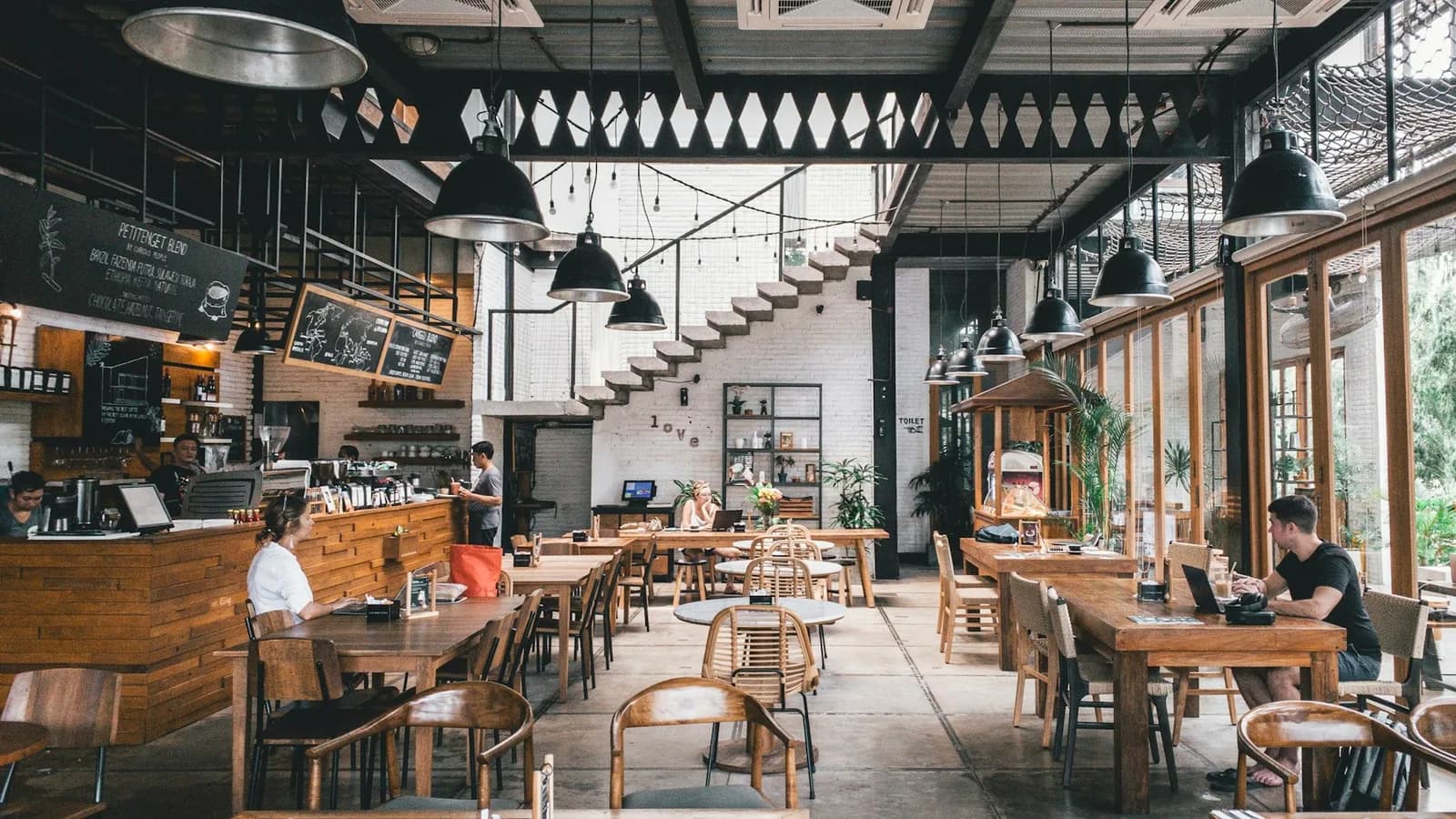
What licenses do you need to open a cafe in India?
The licenses required to open a cafe in India span at least six to nine permits: business entity registration, an FSSAI food license, GST registration, a Shop & Establishment (or trade) license, a fire NOC, a city-specific health or eating-house / police NOC, PPL/IPRS music clearance if you play commercial audio, and signage or outdoor-seating permission where applicable. Missing even one — usually the fire NOC or a state-specific police NOC — is the single most common reason first-time operators delay their soft opening by four to eight weeks.
Rules and fees vary heavily by city and state. Mumbai, Delhi, Bengaluru, Pune, Hyderabad, and Chennai each have their own municipal corporations, and states differ meaningfully on labour, fire, and health-trade norms. Treat this guide as a procurement checklist and sequencing map, not a legal opinion — always confirm current requirements with your local corporation, the state labour department, and a qualified CA before you sign the lease.
Which business entity should you register first?
Before any operational license, register the legal vehicle that will hold the cafe. Indian founders typically pick one of three structures:
- Sole proprietorship — cheapest and fastest (₹1,500–₹5,000 with a CA), but personal liability is unlimited and banks lend cautiously. Reasonable for a single-outlet, small-city trial.
- Partnership firm — similar cost, useful when two founders split roles, but liability is still personal and shared. Requires a formal deed on ₹500–₹1,000 stamp paper.
- Private Limited Company (Pvt Ltd) — ₹8,000–₹18,000 to incorporate via the MCA portal, plus annual compliance (audit, ROC filings). Preferred when you plan to raise capital, open multiple outlets, or protect personal assets.
Most serious cafe founders in metro India default to Pvt Ltd — the incorporation cost is small compared to lease deposits, and every downstream license (FSSAI, GST, current account, lease KYC) needs a clean legal entity anyway. Apply for PAN and TAN alongside incorporation so nothing else stalls.
Why is FSSAI license the anchor step for cafes?
The FSSAI license from the Food Safety and Standards Authority of India is non-negotiable for any food-serving outlet. Cafes typically fall under the State FSSAI license (annual turnover between ₹12 lakh and ₹20 crore), which costs roughly ₹2,000–₹5,000 per year depending on tenure (one to five years). Micro-cafes and small carts with turnover below ₹12 lakh can use the cheaper Basic Registration at around ₹100 per year, but most seated cafes cross that threshold within the first quarter.
Processing usually takes two to four weeks after documents are submitted through the FoSCoS portal, and the FSSAI number must be printed on menus, invoices, packaging, and displayed at the outlet. Because FSSAI touches menu design, kitchen layout, water testing, and pest-control contracts, start it early — the granular application walkthrough is covered in our sibling guide on the FSSAI license for cafes in India.
When is GST registration mandatory for a cafe?
GST registration becomes mandatory once your cafe's aggregate turnover crosses ₹20 lakh in a financial year (₹10 lakh in some special-category states). In practice, almost every metro cafe crosses that threshold in year one, so most operators register voluntarily on day one to claim input tax credit on rent, equipment, and supplies.
Restaurant service GST in India is currently 5% without input tax credit for most standalone restaurants and cafes; specified premises (higher-tariff hotels) may attract 18% with ITC. Rates and rules change with GST Council notifications, so verify the current bracket with your CA the quarter you launch. Filing is monthly or quarterly under QRMP, and integrated POS billing dramatically reduces reconciliation errors — the mechanics are covered in our companion post on GST registration for restaurants in India.
How do you get a Shop & Establishment or trade license?
Every commercial cafe must register under the state's Shops & Establishments Act — also called Gumasta in Maharashtra, Trade License in Delhi and Kolkata, and similar variants elsewhere. It is a labour-department instrument that governs working hours, weekly off, holiday policy, and basic employee welfare. Fees are modest — typically ₹500–₹5,000 depending on staff count and municipal corporation — and validity is one to five years.
Apply through the state labour portal within thirty days of starting operations. Requirements vary meaningfully by state:
- Maharashtra — Gumasta issued by the Municipal Corporation of Greater Mumbai (MCGM).
- Karnataka — registration through the Labour Department's e-Karmika portal.
- Delhi — Trade License issued by the MCD, usually alongside a health trade license for eating houses.
- Tamil Nadu / Telangana / West Bengal — separate state labour portals, each with their own document lists.
Always check your specific corporation's site — a Bengaluru cafe cannot operate on a Mumbai Gumasta.
When does fire NOC apply to a cafe?
Fire No-Objection Certificates are issued by the state Fire & Emergency Services department. Triggers vary but generally apply when:
- The premises has an LPG-based commercial kitchen or a heavy electrical load.
- Total built-up area or seating exceeds thresholds set by state fire rules (often 100–200 sq m or 50+ covers).
- The building is above ground floor or has restricted egress.
Fees range from ₹5,000 to ₹25,000 depending on area and state, plus the cost of extinguishers, smoke detectors, emergency lighting, and signage that inspectors will verify. Fire NOC frequently becomes the critical-path license for cafes with a real kitchen — start the application in parallel with civil work, not after. Fire clearance is also usually a prerequisite for municipal health trade licenses in Delhi, Mumbai, and Bengaluru, so treat it as an early dependency, not a last-mile checkbox.
Do cafes need eating-house or police NOC?
Several Indian cities require an additional Eating House License or Police NOC on top of FSSAI and Shop Act:
- Delhi — MCD-issued Health Trade License plus a Delhi Police Eating House License for any premises serving food to be consumed on-site.
- Mumbai — BMC Health License under the BMC Act; some wards additionally require a police NOC, and any late-night operations invariably do.
- Bengaluru — BBMP Trade License with health clearance; police NOC only when late-night hours or live entertainment are involved.
- Kolkata, Chennai, Hyderabad, Pune — municipal Health Trade License plus city-specific variations, with police NOC often triggered by late-night operations or amplified music.
The rule of thumb is simple: always check your local municipal corporation and jurisdictional police station before assuming a state-level license is enough. Enforcement tightens sharply after any high-profile safety incident, and rules are refreshed every couple of years.
What about music, signage, and outdoor seating permits?
Three smaller but frequently missed items round out the stack:
- Music license (PPL / IPRS / Novex) — if you play commercial recorded music, sound-recording rights are administered by Phonographic Performance Limited (PPL) and public performance of the underlying compositions by the Indian Performing Right Society (IPRS). Cafes typically pay ₹15,000–₹40,000 per year combined, depending on seating and city tier. Curated royalty-free playlists are a legitimate workaround for very small outlets.
- Signage permit — outdoor boards, glow signs, and large window graphics almost always need municipal signage permission. Fees are modest but non-compliance invites removal notices and fines.
- Outdoor seating / footpath encroachment — pavement or terrace seating requires a separate municipal permit and, in some cities, traffic-police clearance. Never assume the landlord's original occupancy approval covers new outdoor tables.
Skipping the music license is one of the most common oversights, and PPL/IPRS field officers do visit metro cafes. Budget for it, or design your ambience around royalty-free audio.
What is a realistic pre-opening license timeline?
For a typical metro cafe, plan eight to sixteen weeks for the full stack, running as much in parallel as possible. A realistic sequencing map:
- Weeks 1–2 (kick-off) — incorporate entity (Pvt Ltd), apply for PAN/TAN, open the current account, and file GST registration.
- Weeks 2–6 (parallel core) — file the FSSAI application on FoSCoS, begin the Shop & Establishment / trade license application, and initiate the fire NOC application. Fire NOC is the slowest permit and must start early.
- Weeks 4–8 (municipal) — apply for the health trade license or eating-house license with the local corporation once fire NOC is progressing, and file signage and outdoor-seating requests.
- Weeks 6–10 (peripheral) — arrange PPL/IPRS music licenses, secure pollution-control consent if the exhaust/kitchen size triggers it, and complete labour-welfare registrations (ESI/EPF once headcount thresholds apply).
- Weeks 8–12 (soft-open readiness) — collect originals, laminate copies for the outlet display board, and run a mock inspection with your CA or consultant before serving the first paid customer.
Treat this as parallel-first, sequential-only-when-forced. FSSAI and Shop Act do not depend on fire NOC and should run simultaneously. Municipal health licenses and police NOCs usually depend on FSSAI numbers and fire clearance, so queue them second.
How can TasteIQ handle the full license stack for you?
The paperwork is doable in-house, but it consumes founder attention at exactly the moment you should be finalising menu, hiring baristas, and negotiating supplier contracts. TasteIQ's in-house CA and legal partners handle the full pre-open license stack as a done-for-you package — entity registration, FSSAI, GST, Shop Act, fire NOC coordination, municipal trade license, PPL/IPRS, and signage — with a single project manager, a fixed timeline, and city-specific know-how for Mumbai, Delhi, Bengaluru, Pune, Hyderabad, and Chennai.
Once you are licensed and ready to trade, you also need billing that stays GST-compliant from day one, prints correct food-service tax lines, and syncs stock with your bakery counter — that is exactly what our restaurant POS software is built for. To get the full cafe license checklist tailored to your city, message the team on WhatsApp — share your location and target opening date, and we will send back a document list and a week-by-week plan.