Why tiffin delivery management is a different problem
Most food delivery advice assumes marketplace apps, surge pricing, and one-off orders. Subscription tiffin businesses do not work that way.
Your customers expect the same dabba, in the same window, on the same days, often for months. The kitchen does not need a new rider network every lunch—it needs a repeatable tiffin delivery management system that turns active subscriptions into a clean daily packing list, then gets those boxes out the door without WhatsApp chaos.
That is the real founder decision: own delivery fleet versus third-party delivery staff. Both can work in India. Both fail when the order list, packing sheet, and rider assignment live in three different notebooks.
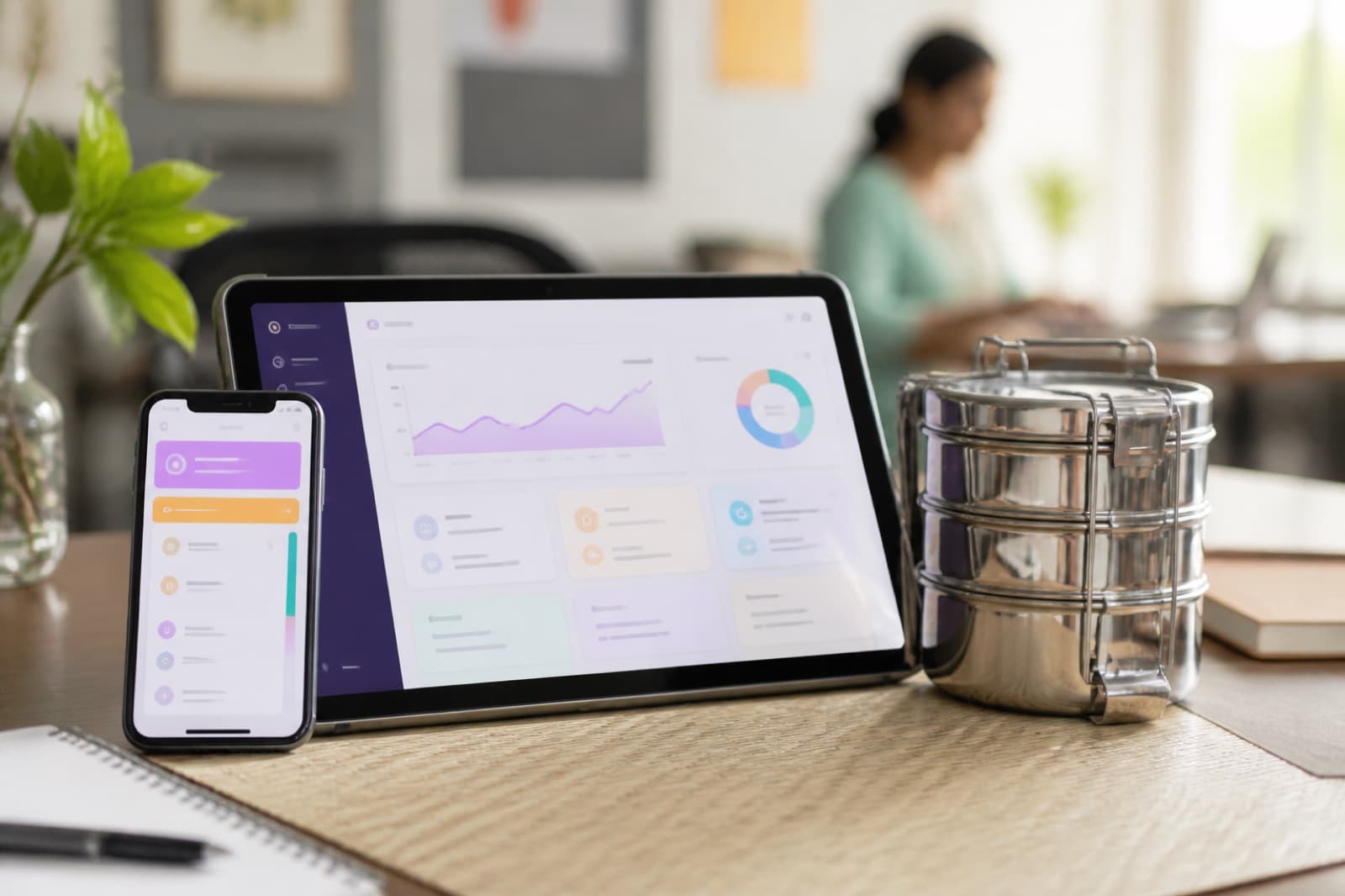
TasteIQ is built for that operating layer—website, app, pause/resume plans, GST billing, and flexible assignment of your riders or your third-party staff. It is not a delivery marketplace that supplies riders, and it does not guarantee on-time delivery. Reliability still depends on how you staff and supervise the last mile.
Own fleet vs third-party: the operating choice
Before comparing costs, define what each model actually means for a tiffin brand.
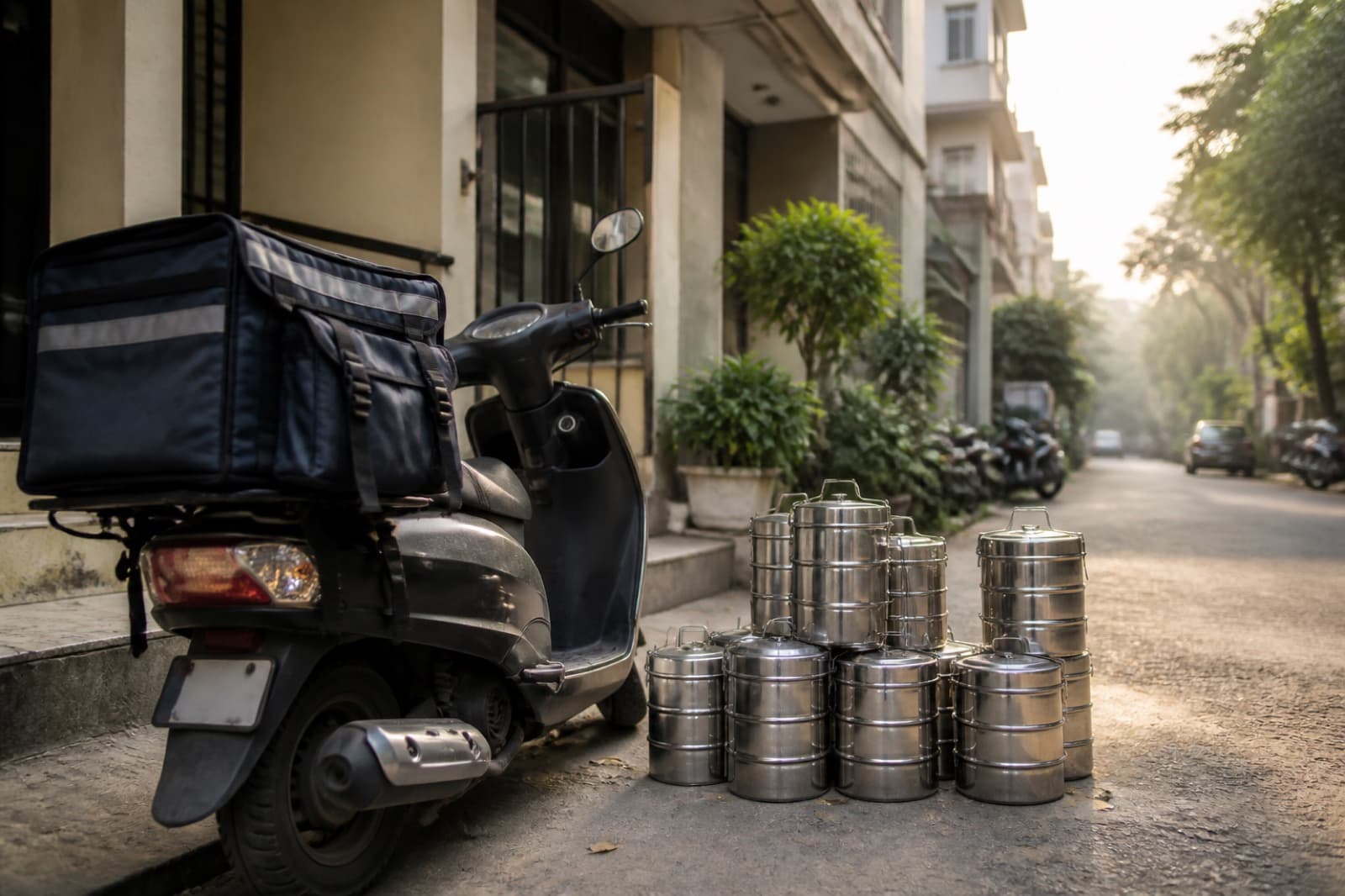
Own delivery fleet means you hire or contract riders who work primarily for your kitchen. You decide routes, bags, uniforms, cash collection rules, and escalation when a building guard refuses entry. Brand control is high. Fixed cost is also high until density is strong.
Third-party delivery staff means you use external riders or a local delivery partner for some or all runs. You still own the customer and the meal plan. You hand them a day’s order list—or assign them inside your tiffin delivery software—instead of rebuilding ops inside someone else’s consumer app. Variable cost is usually lower at low volume. Control and consistency are harder.
Neither option is “Uber for tiffin.” Aggregator marketplaces sell discovery and demand. You already have subscription demand. Your problem is execution density: how many active boxes per square kilometer, per meal slot, with how much rider idle time.
Comparison table: own fleet vs third-party delivery staff
| Factor | Own delivery fleet | Third-party delivery staff |
| --- | --- | --- |
| Typical cost shape | Higher fixed (salary/retainer, incentives, fuel advances) | Higher variable (per-drop or per-route fees) |
| Best when | Dense clusters (PGs, offices, hostels) in a tight radius | Sparse routes, new localities, overflow meal slots |
| Brand control | Strong—uniform, etiquette, bag standards | Weaker—depends on partner brief and supervision |
| Reliability levers | Hiring, training, route ownership, backup riders | Partner SLAs, dual assignment, clear cut-off times |
| Cash / COD risk | You design the process end to end | Needs stricter reconciliation with external staff |
| Scaling pain | Hiring and managing people before density arrives | Quality drift and “who owns the complaint?” |
| System of record | Same daily packing list + assignments | Same daily packing list + assignments |
The table is not a verdict. It is a cost-and-control map. Many profitable tiffin kitchens in India run a hybrid: own riders for core clusters, third-party staff for edge areas and festival overflow.
Cost drivers that actually move the P&L
Founders often compare “₹X per rider” to “₹Y per drop” and stop there. Unit economics for subscription delivery are denser than that.
1. Fuel and trip shape
Fuel burns on kilometers and rework, not on the number of subscribers in your CRM. A 40-box lunch route in one IT park corridor can be cheaper than a 25-box route that zigzags across three pin codes. Own fleets feel this immediately because fuel advances and scooter wear show up as weekly cash.
Third-party models often price per drop, which can look cheap until low density forces more trips or late returns. Either way, route design beats rider count.
2. Salary, retainers, and idle time
Own riders need predictable pay even on thin days—rainy Sundays, festival weeks when half the plan is paused, or exam-season PG empties. That idle time is the hidden cost of brand-controlled delivery.
Third-party staff shift idle risk to the partner, but you pay a premium when volume spikes or when you need last-minute coverage. Model both: fixed cost at 60% utilization for own fleet, and peak-week fees for third-party coverage.
3. Density and meal-slot windows
Tiffin is a time-boxed business. Breakfast, lunch, and dinner are not continuous delivery. A dense lunch cluster can support an own scooter in 90 minutes. The same rider count fails if subscribers are scattered and the kitchen packs late.
This is why tiffin route management India operators obsess over catchment, not citywide “coverage.” Grow density in a few societies first. Then decide fleet ownership.
4. Packaging, bags, and failure cost
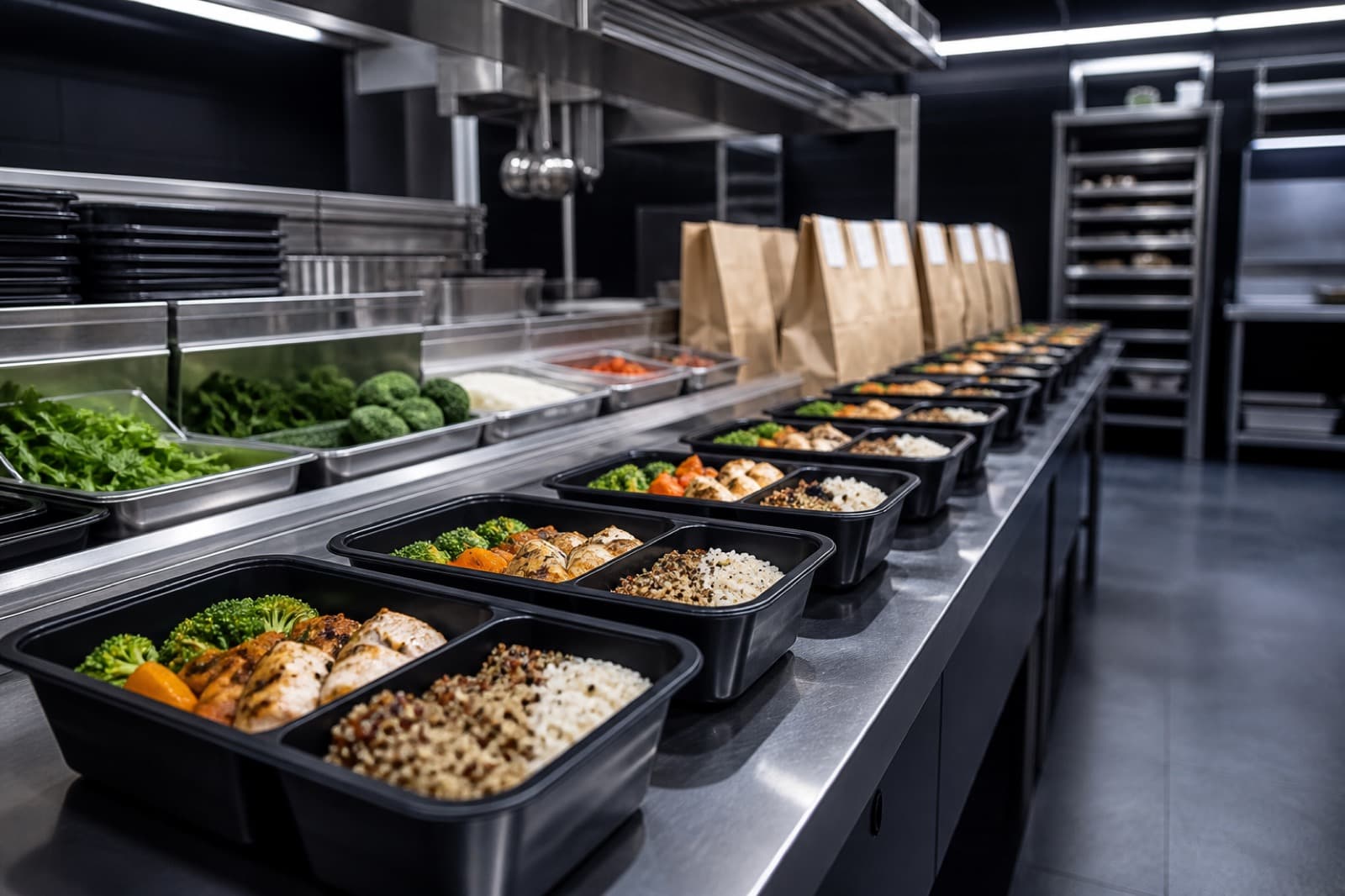
Wrong floor, missing bag, or a cold curry complaint costs more than one drop fee. Own fleets make training easier. Third-party staff need a tighter packing list, labeled bags, and a single assignment source so nobody argues about which box belonged to which rider.
Reliability and brand control without marketplace myths
Customers judge your brand on the dabba that arrives—not on whether the rider’s UPI is on your payroll. Still, control differs.
Own fleet advantages
- Consistent building access habits and known security desks
- Easier to enforce no-call-before-arrival rules that annoy PGs
- Clearer accountability when a subscriber says “my lunch never came”
- Better upsell of add-ons when riders know regulars
Third-party advantages
- Faster geographic experiments without hiring
- Easier overflow for Diwali weeks or sudden lunch demand
- Lower commitment while you validate a new pin code
- Ability to keep kitchen headcount focused on food, not HR
Reliability is not purchased from software. Software makes reliability auditable: who was assigned, what was packed, which plans were active after pause/resume, and which drop was marked done. TasteIQ supports that workflow for own fleet or third-party staff. It does not supply riders and does not promise on-time delivery SLAs.
The hybrid model most growing kitchens use
A practical hybrid for Indian tiffin brands:
- Core radius (own fleet): 3–6 km clusters with stable weekday volume. Your riders own the relationship and the route memory.
- Edge areas (third-party staff): New societies, weekend-only drops, or thin dinner routes.
- Overflow (third-party staff): Festival surges, rider absenteeism, or temporary kitchen capacity spikes.
- One daily list: Every rider type works off the same packing and assignment sheet. No parallel WhatsApp “final final” lists.
Hybrid fails when the kitchen prints two lists—one for “our boys” and one for “agency”—and they diverge after morning pause requests. The commercial rule is simple: one system of record for active orders, then assignment flexibility on top.
Make one daily order list the system of record
This is the operational heart of tiffin delivery management.
Every morning (or the night before), the kitchen needs a single answer to:
- Who is active for today’s meal slot?
- Who paused, skipped, or resumed since yesterday?
- How many boxes of each SKU to cook and pack?
- Which rider (own or third-party) owns which stops?
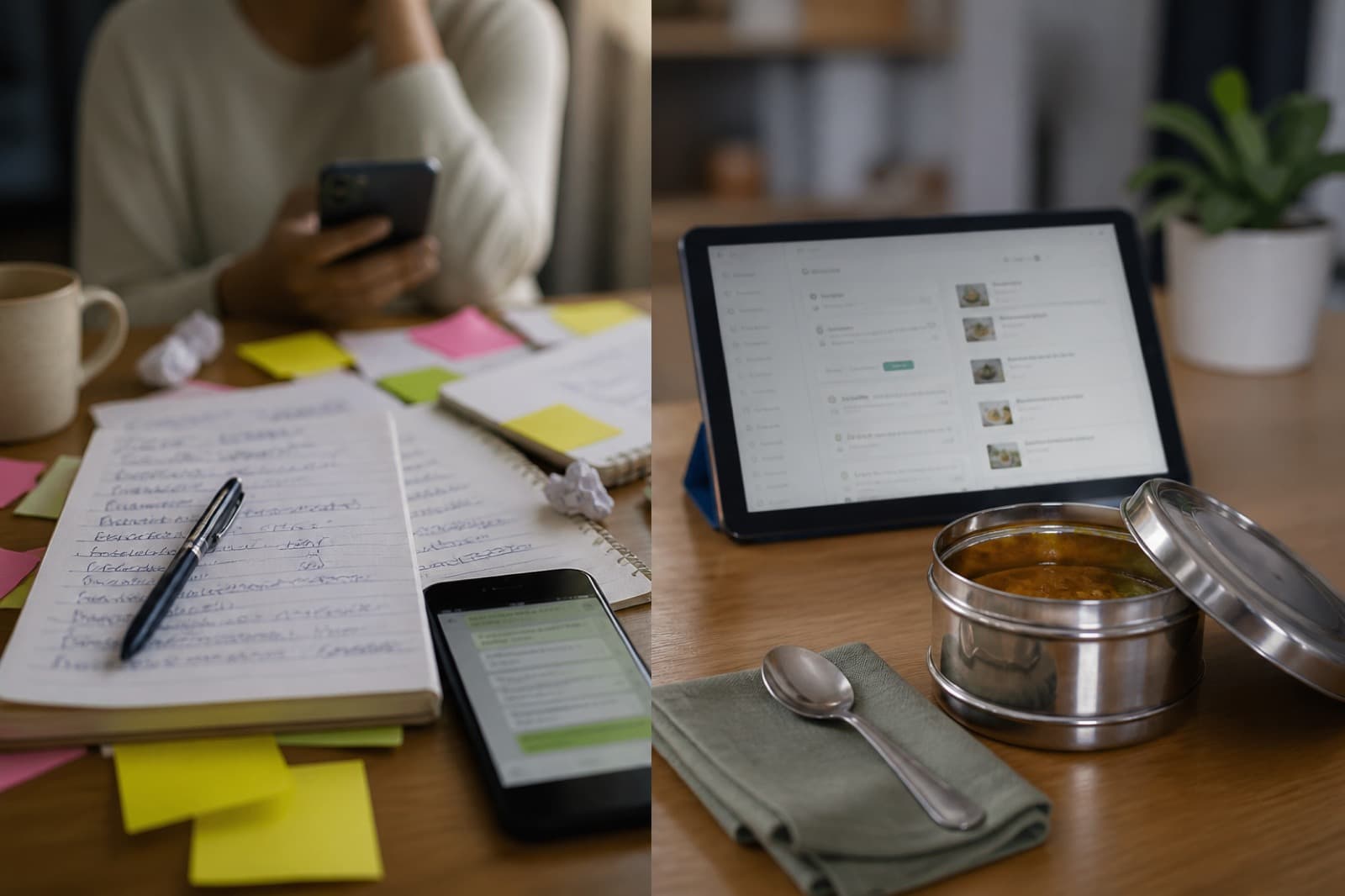
If pause/resume lives in a Google Sheet, packing lives in a notebook, and assignment lives in a group chat, your prep counts drift. You overcook, underpack, or send two riders to the same tower.
Good tiffin delivery software treats the daily list as the source of truth:
- Subscription state (active / paused / skipped) updates prep counts
- Packing list and rider assignment share the same order set
- Website and app changes by customers flow into tomorrow’s kitchen work, not into an argument after delivery
TasteIQ is designed around that loop: branded website + ordering app, GST-ready billing, pause/resume plans that affect prep counts, and assignment of own fleet or third-party staff against one daily list. Again—not a rider marketplace.
Decision framework for founders
Use this sequence instead of copying a competitor’s fleet photo on Instagram.
| Question | Lean own fleet if… | Lean third-party if… |
| --- | --- | --- |
| How dense is your active lunch map? | Most boxes sit in 2–4 tight clusters | Stops are scattered across many pin codes |
| How stable is weekday volume? | Predictable plans with low pause volatility | High churn of localities or seasonal empties |
| Can you supervise riders daily? | You or a manager can brief and check returns | Kitchen leadership is already stretched |
| What breaks first when volume grows? | Hiring lag and training | Partner quality and complaint ownership |
| What is your brand promise? | Uniformed, relationship-led delivery | Reliable meal first; logistics is flexible |
Then stress-test cash:
- Price your own-fleet month at realistic utilization (not peak Tuesday).
- Price third-party coverage at peak week, not quiet week.
- Add failure cost: re-delivery, refunds, and churn from late dabbas.
- Choose hybrid thresholds: “own fleet inside X km / Y boxes; third-party beyond.”
How TasteIQ fits without overclaiming
If you are choosing a stack for subscription tiffin ops, evaluate software on kitchen truth and assignment flexibility—not on promises that someone else will magically deliver on time.
With TasteIQ you can:
- Run a branded website and ordering app for meal plans
- Let customers pause, resume, and skip so prep counts stay honest
- Generate one daily order / packing list as the system of record
- Assign own delivery fleet or third-party delivery staff to that same list
- Keep GST billing in the same operating flow
- Start with a 14-day trial before you rebuild processes around a tool
What TasteIQ does not do: supply riders, act as a delivery marketplace, or guarantee on-time delivery. Those outcomes remain your operating responsibility—and that clarity is intentional. Founders who want marketplace logistics should compare consumer platforms. Founders who want to run a subscription kitchen should own the list, then choose the labor model that matches density.
Practical 30-day rollout
Week 1: Map every active subscriber by meal slot and pin code. Mark dense clusters.
Week 2: Put pause/resume and the daily packing list into one system. Stop accepting “also add my cousin” changes after cut-off without updating the list.
Week 3: Assign own riders to the densest cluster only. Use third-party staff for the long tail. Compare late marks and complaint reasons, not vibes.
Week 4: Lock hybrid rules, backup coverage for absenteeism, and a single end-of-day reconciliation for COD or prepaid exceptions.
By the end of the month you should know whether your bottleneck is density, packing discipline, or rider supervision—not whether you need “more WhatsApp groups.”
Choose the model that matches density, then systemize the list
Own fleet wins when density, supervision, and brand control justify fixed cost. Third-party staff win when you are testing geography, absorbing overflow, or keeping headcount lean. Hybrid wins for most scaling kitchens in India—if one daily order list remains the system of record.
If you want that operating backbone for subscription tiffin—website, app, pause/resume, GST, and flexible assignment of your own or third-party riders—start the 14-day trial on TasteIQ or see how the tiffin launcher is structured for home cooks, cloud kitchens, and tiffin vendors.